
[vc_row css=”.vc_custom_1721188985333{padding-top: 32px !important;}”][vc_column][vc_single_image image=”7759″ img_size=”full” css=””][/vc_column][/vc_row][vc_row][vc_column][vc_column_text css=””]
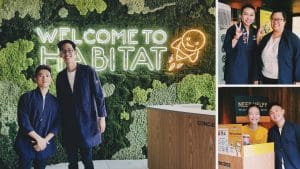
Picture this: You’re rushing to get a drink in the middle of a store, bombarded with marketing promos and countless signup stickers. (I just want my coconut drink!) Yeah, not exactly peak shopping experience. That’s what happened at habitat by honestbee, where our initial sleek UX signage got lost in a sea of visual noise. But instead of shrugging it off (#bochup) and letting chaos reign, I saw it fit to champion user-centered design.
This case study dives into my team’s journey, armed with the power of data analysis and teamwork. We didn’t just clear the visual clutter, we created a streamlined in-store messaging (ISM) system. Business KPIs met? Check. Clear yet engaging shopping experience? Double check.[/vc_column_text][/vc_column][/vc_row][vc_row css=”.vc_custom_1718754317298{padding-bottom: 32px !important;}”][vc_column][lab_text_autotype typed_text=”
*Project in brief*
“][vc_row_inner][vc_column_inner width=”1/2″][vc_column_text css=””]
COMPANY
honestbee is a Singaporean tech company that revolutionised online grocery shopping in Southeast Asia. They offered convenient delivery services and connected customers with a wide variety of fresh and specialty products.[/vc_column_text][vc_column_text css=””]
PRODUCT
habitat by honestbee is the company’s ambitious foray into physical retail. Launched in Oct 2018, it was a multi-faceted experience – a full supermarket, specialty grocer, online fulfillment center, and interactive dining destination all rolled into one.[/vc_column_text][/vc_column_inner][vc_column_inner width=”1/2″][vc_column_text css=””]
PROBLEMS
Overwhelming visual clutter due to inconsistent messaging across departments. To improve the poor customer UX, I initiated cross-functional collaboration, comprising workshops, discussions, and creation of a consistent visual language system for habitat and future projects (beePoint).[/vc_column_text][vc_column_text css=””]
RESULTS
The ISM system categorised message types and design templates. Clearly-define scopes for each department also allowed for ongoing collaboration. The streamlining exercise resulted in a clearer, more organised shopping experience for habitat customers.[/vc_column_text][/vc_column_inner][/vc_row_inner][/vc_column][/vc_row][vc_row css=”.vc_custom_1721154649112{padding-top: 64px !important;padding-bottom: 0px !important;}”][vc_column][vc_single_image image=”7761″ img_size=”full” css=””][/vc_column][/vc_row][vc_row css=”.vc_custom_1721154635577{padding-top: 32px !important;padding-bottom: 32px !important;}”][vc_column][vc_column_text css=””]Oohs and aahs, and ‘Grammable moments. That seemed to be all the rage (and every budding content creator’s ‘roids) back in 2018. #fomo. Once new-gen retail & dining destination, habitat by honestbee launched, delivering a vibrant in-store experience daily felt critical. Hello, yellow! But what happens when good intentions lead to visual overload?[/vc_column_text][vc_single_image image=”7771″ img_size=”full” add_caption=”yes” alignment=”center” css=”.vc_custom_1721154506447{padding-top: 32px !important;padding-bottom: 32px !important;}”][vc_column_text css=””]I remember one afternoon, I stood paralysed. Our first set of “cleverly-designed” instructional UX signages quickly became overshadowed by a blinding wave of luminous lemon-kissed instals by other teams, all eager to “stand out” and contribute to this customer experience. Legit stun like 🥦.
I realised, a cup of double-shot coffee later, that this presented an opportunity: to clean up this mess champion clarity above clutter. For this initiative to actually work, cross-functional collaboration was needed (gasp!). Well, I’m no stranger to making new friends now, innit? Through a mind-numbing visual audit with my UX lead, data analysis, and open communication with other departments, I partnered with various teams to co-create a streamlined in-store messaging (ISM) system. One that adequately addressed each team’s unique business needs while bringing clarity back to the shopping experience. [/vc_column_text][vc_single_image image=”7775″ img_size=”full” css=”.vc_custom_1721157140161{padding-top: 24px !important;padding-bottom: 24px !important;}”][vc_single_image image=”7774″ img_size=”full” css=””][/vc_column][/vc_row][vc_row][vc_column][lab_heading title_tag=”H4″ title=”Data detective on duty”][/lab_heading][vc_column_text css=””]I didn’t really have a strong industry background in grocery shopping back in school. Specifically, retail psychology. In fact, I was still pretty new to this physical-digital UX hybrid (just around 7-8 months in!), but the mounting risks from customer confusion fuelled my curiosity.
Also, let’s face it. I was wildly driven by the need to save my UX team’s hard work from drowning in this chaotic sea of canary, let’s just say that. So, I dug in. [/vc_column_text][vc_column_text css=””]Content audit. I conducted a very detailed visual audit, meticulously documenting the existing signage landscape. Table sticker, decal or standee, you name it, I got all of ‘em. It was like a visual census, counting and categorising every sign, banner, and wobbly display. No bee was safe.[/vc_column_text][vc_row_inner][vc_column_inner width=”1/2″][vc_single_image image=”7778″ img_size=”full” css=””][vc_single_image image=”7779″ img_size=”full” css=””][/vc_column_inner][vc_column_inner width=”1/2″][vc_single_image image=”7780″ img_size=”full” css=””][vc_single_image image=”7781″ img_size=”full” css=””][/vc_column_inner][/vc_row_inner][vc_column_text css=””]Blueprints. Thanks to my architect parents, I wasn’t a newbie when it comes to reading and analysing interior spaces. With the actual store blueprints on hand, every shelf, table and designer chair were accounted for in my updated floorplan.[/vc_column_text][vc_single_image image=”7777″ img_size=”full” add_caption=”yes” alignment=”center” css=””][/vc_column][/vc_row][vc_row css=”.vc_custom_1721159065897{padding-top: 32px !important;padding-bottom: 32px !important;}”][vc_column][lab_heading title_tag=”H4″ title=”Down the retail rabbit hole”][/lab_heading][vc_column_text css=””]Next, I dove right into research on in-store messaging best practices. I looked up publications like the Grocery White Paper (2008, by the Time Use Institute), and POP Trends 2016 (Path to Purchase Institute). Studies on banner blindness (the phenomenon of customers tuning out overwhelming signage) became my new bedtime reading.
Plans of launching smaller, convenience-store-like beePoints across Singapore were in the works so I had to keep that in mind, too. Behavioural patterns unique to scale or location were potential issues and areas I had to cover.[/vc_column_text][vc_single_image image=”7793″ img_size=”full” css=”.vc_custom_1721165561354{padding-top: 24px !important;padding-bottom: 24px !important;}”][vc_column_text css=””]Time-poor c-shoppers (2017) published by William Reed Media shared an interesting statistic. I read, “The average time needed to convince shoppers to view store displays is 0.9s.” For time-poor c-shoppers (found at potential beePoints), that’s even lower at 0.3s.[/vc_column_text][/vc_column][/vc_row][vc_row css=”.vc_custom_1721159077278{padding-top: 32px !important;padding-bottom: 32px !important;}”][vc_column][lab_heading title_tag=”H4″ title=”Going the extra mile”][/lab_heading][vc_column_text css=””]In the evenings after work, I made trips to the city, scavenging for ISMs deployed across Singapore’s retail spaces. From small convenience pop-up stores to large shopping haunts with high foot traffic like Isetan, Tangs, IKEA (Tampines) and Vivo City.
I took notes on how these places executed fairly crafted ISMs. Extra points for those that delivered coherent brand experiences among casual visitors and target shoppers alike. [/vc_column_text][/vc_column][/vc_row][vc_row css=”.vc_custom_1721188965202{padding-top: 32px !important;padding-bottom: 32px !important;}”][vc_column][lab_heading title_tag=”H4″ title=”Oh boy, sparking joy”][/lab_heading][vc_column_text css=””]Buzzing with knowledge, the data painted a clear picture: we needed a strategic messaging overhaul. Here’s the tentative plan I had so far.
1. Categorisation is key. We needed to group the existing ISM into distinct buckets. [/vc_column_text][vc_column_text css=””]2. Colour Each category could be assigned a specific colour based on colour psychology principles. For example, neutral blacks for instruction and wayfinding to guide customers with a sense of ease.[/vc_column_text][vc_column_text css=””]3. Design language that speaks volumes. Consistent typography, visuals, and layouts would be tailored to each category.[/vc_column_text][vc_empty_space][vc_single_image image=”5904″ img_size=”full” css=””][vc_single_image image=”5905″ img_size=”full” css=””][vc_single_image image=”5906″ img_size=”full” css=””][vc_single_image image=”5907″ img_size=”full” css=””][/vc_column][/vc_row][vc_row][vc_column][lab_heading title_tag=”H4″ title=”Cross-team collaboration”][/lab_heading][vc_column_text css=””]Sure, I had the plan, but getting buy-in from other teams was a must! So, together with my UX lead, we workshopped our ideas and presented our data-driven findings to the other teams separately (i.e. in-store Logistics, Visual Merchandising, Customer Concierge personnel, and Brand & Marketing). I facilitated open discussions across several days. The collaborative brainstorming sessions sealed the deal – everyone was on board![/vc_column_text][vc_row_inner][vc_column_inner width=”1/2″][vc_single_image image=”7783″ img_size=”full” css=””][/vc_column_inner][vc_column_inner width=”1/2″][vc_single_image image=”7784″ img_size=”full” css=””][/vc_column_inner][/vc_row_inner][vc_row_inner][vc_column_inner][vc_single_image image=”7785″ img_size=”full” css=””][vc_single_image image=”7786″ img_size=”full” css=””][/vc_column_inner][/vc_row_inner][vc_column_text css=””]With UX setting the example, each team were tasked to contribute and own their distinct ISM visual style. We all agreed, the clear guidelines put in place helped reduce overlaps and message dilution.[/vc_column_text][/vc_column][/vc_row][vc_row css=”.vc_custom_1721199807392{padding-top: 32px !important;padding-bottom: 0px !important;}”][vc_column][lab_heading title_tag=”H4″ title=”The impact? A visual oasis”][/lab_heading][vc_column_text css=””]The streamlined ISM system transformed the store environment. Gone was the yellow overload, replaced by a clear and organised visual language. Customers could now navigate with ease, understand product information at a glance, and actually see the messages we intended.[/vc_column_text][vc_row_inner css=”.vc_custom_1721195672118{padding-top: 32px !important;}”][vc_column_inner width=”2/3″ css=”.vc_custom_1721199866300{border-radius: 20px !important;}”][vc_single_image image=”7798″ img_size=”full” css=”.vc_custom_1721200020018{border-radius: 20px !important;}”][/vc_column_inner][vc_column_inner width=”1/3″][/vc_column_inner][/vc_row_inner][vc_row_inner][vc_column_inner width=”1/6″][/vc_column_inner][vc_column_inner width=”5/6″ css=”.vc_custom_1721199853035{border-radius: 20px !important;}”][vc_single_image image=”7799″ img_size=”full” css=”.vc_custom_1721200007917{border-radius: 20px !important;}”][/vc_column_inner][/vc_row_inner][vc_row_inner][vc_column_inner css=”.vc_custom_1721199830569{border-radius: 20px !important;}”][vc_single_image image=”7800″ img_size=”full” css=”.vc_custom_1721199994469{border-radius: 20px !important;}”][/vc_column_inner][/vc_row_inner][/vc_column][vc_column][vc_single_image image=”7791″ img_size=”full” css=”.vc_custom_1721200147256{padding-top: 32px !important;padding-bottom: 32px !important;border-radius: 20px !important;}”][vc_column_text css=””]Bonus. Industry benchmarks suggest clear signage can lead to a 5-10% increase in conversion rates. While we didn’t have access to specific store data at the time, the positive customer feedback and smoother shopping experience were clear indicators of success.[/vc_column_text][/vc_column][/vc_row][vc_row][vc_column][lab_heading title_tag=”H4″ title=”Key takeaways”][/lab_heading][vc_column_text css=””]This project was a masterclass in user-centered design and the power of collaboration across teams. It also showed that even a UX/UI newbie with a thirst for knowledge (and a healthy dose of “energizer bunny” spirit!) can make considerable impact on improving daily shopping experiences.[/vc_column_text][vc_empty_space height=”80px”][/vc_column][/vc_row]